Dry Scalp, Dandruff and Itching: What Is Really Happening to Your Scalp and How Can You Restore Its Comfort?
Causes, symptoms, scientific research and expert advice on effective scalp care.
An itchy scalp, persistent flaking, a burning sensation or uncomfortable tightness after washing your hair? Many people immediately reach for an anti-dandruff shampoo. However, not every flaky scalp is caused by dandruff, and not every itchy scalp is a sign of dryness.
The scalp is a complex biological environment. It produces sebum, maintains its own microbiome, protects against external aggressors and provides the environment in which hair follicles function.
When this delicate balance is disrupted, even a seemingly minor issue can lead to persistent discomfort.
Interestingly, dermatological research shows that dandruff is not simply caused by the presence of Malassezia yeast. The condition is also associated with changes in the skin barrier, lipid composition, microbial balance and inflammatory responses.
Understanding these mechanisms is the first step towards choosing effective scalp care rather than simply masking the symptoms.
1. What Is Dry Scalp and Why Does It Develop?
Dry scalp occurs when the outermost layer of the skin struggles to retain sufficient moisture.
This may result from a lack of protective lipids, disruption of the skin barrier, exposure to irritating external factors or underlying dermatological conditions.
One of the key mechanisms involved is increased transepidermal water loss (TEWL).
When the skin barrier becomes compromised, moisture escapes more easily, leaving the scalp vulnerable to irritation, sensitivity and discomfort.
Common symptoms of dry scalp include:
Tightness, particularly after washing.
Persistent or occasional itching.
A burning or stinging sensation.
Small, dry flakes.
Roughness and sensitivity.
Redness or visible irritation.
What Can Damage the Scalp's Protective Barrier?
Hot water and excessive washing
Very hot water and harsh cleansing routines may strip away protective surface lipids, increasing dryness and irritation.
Unsuitable hair care products
Certain cleansing agents, fragrances and preservatives can cause irritation or allergic reactions in susceptible individuals.
Dry air and seasonal changes
Low humidity, particularly during the winter heating season, can increase moisture loss from the skin.
Chemical hair treatments
Bleaching, colouring and other intensive treatments may irritate the scalp and temporarily compromise its protective barrier.
Underlying skin conditions
Atopic dermatitis, psoriasis, seborrhoeic dermatitis and allergic contact dermatitis can all cause scalp discomfort and flaking.
Stress and hormonal changes
Stress can influence inflammatory skin conditions and may contribute to flare-ups in susceptible individuals. Hormonal changes may also affect sebum production and skin behaviour.
Importantly, dry scalp does not always mean that the sebaceous glands are producing too little oil.
The problem may also involve changes in the structure and organisation of lipids within the skin barrier.
2. Dry Scalp vs Dandruff: What Is the Difference?
Dry scalp and dandruff are frequently confused because both can cause visible flaking and itching.
However, they are not necessarily the same condition and may require different approaches.
Dry Scalp
Dry scalp is generally associated with inadequate moisture retention and disruption of the skin barrier.
Common signs include fine, dry flakes, tightness and increased sensitivity, especially after washing.
Dandruff
Dandruff involves abnormal shedding of skin cells and is associated with interactions between the scalp microbiome, sebum and the immune system.
The yeast Malassezia, which naturally lives on human skin, plays an important role in many cases.
Dandruff can occur on both oily and relatively dry scalps.
| Feature | Dry Scalp | Dandruff |
|---|---|---|
| Main concern | Reduced moisture retention or impaired skin barrier | Abnormal flaking, microbial interactions and inflammation |
| Flakes | Often small and dry | Fine or larger, dry or oily |
| Itching | Common | Common |
| Sebum levels | May be low or normal | May be low, normal or high |
| Main approach | Gentle cleansing and barrier-supporting care | Targeted anti-dandruff treatment and gentle scalp care |
What Does Scientific Research Reveal?
A 2020 study involving 54 women with dandruff and 30 women without dandruff investigated the biophysical characteristics of the scalp.
Researchers observed that both dry and oily dandruff were associated with reduced skin hydration and increased transepidermal water loss.
This finding challenges the common assumption that dandruff is always linked to an excessively oily scalp.
The key takeaway: dandruff and scalp dryness can exist at the same time.
Therefore, choosing products based solely on whether the scalp appears oily or dry may not be enough.
3. Why Does Your Scalp Itch?
Itching, medically known as pruritus, occurs when sensory nerve endings in the skin are stimulated.
It can result from several different processes, including:
Skin barrier disruption.
Inflammation.
Allergic reactions.
Irritation from cosmetic products.
Dandruff or seborrhoeic dermatitis.
Psoriasis and other dermatological conditions.
If your scalp mainly itches after washing, consider the temperature of the water, the frequency of washing and the products being used.
If itching is accompanied by redness, recurring flakes or greasy scales, seborrhoeic dermatitis may be involved.
Severe itching following hair colouring may indicate allergic contact dermatitis, particularly in individuals sensitive to certain hair dye ingredients.
When should you seek professional advice?
Persistent itching accompanied by pain, sores, crusting, pustules or localised hair loss should be assessed by a healthcare professional.
4. The Scalp Microbiome: The Invisible Ecosystem Behind Healthy Hair
Your scalp is home to a diverse community of microorganisms, including bacteria and fungi.
This ecosystem is known as the scalp microbiome.
Many of these microorganisms are completely normal inhabitants of healthy skin.
Among them are yeasts belonging to the genus Malassezia.
These microorganisms use lipids found on the scalp as a source of nutrients.
In susceptible individuals, interactions between Malassezia, sebum components and the immune system may contribute to inflammation and accelerated skin cell shedding.
However, modern dermatology increasingly recognises that dandruff is not simply the result of having too much yeast.
Research published in recent years highlights the importance of:
Microbial balance.
Skin barrier integrity.
Lipid composition.
Individual immune responses.
Inflammatory processes.
What Did Research Published in 2025 Discover?
A study published in the Journal of Drugs in Dermatology investigated scalp barrier function, ceramide levels and the microbiome in individuals with dandruff.
Researchers identified several important differences in affected scalps, including:
Increased transepidermal water loss.
Reduced scalp hydration.
Changes in ceramide composition.
Differences in the scalp microbiome.
Increased itching and flaking.
Particular attention was given to long-chain ceramides, which are important components of the skin's protective lipid structure.
These findings support the idea that managing dandruff may require attention not only to microbial factors but also to the condition of the scalp barrier.
However, this does not mean that a shampoo containing ceramides alone can treat dandruff.
5. Seborrhoeic Dermatitis: When Dandruff Becomes More Than a Cosmetic Concern
Seborrhoeic dermatitis is a chronic, recurring inflammatory skin condition.
It commonly affects areas rich in sebaceous glands, including the scalp, eyebrows, sides of the nose and areas around the ears.
Typical symptoms include:
Redness and inflammation.
Persistent itching.
White or yellowish scales.
Greasy or flaky patches.
Recurring irritation.
Unlike simple scalp dryness, seborrhoeic dermatitis may require targeted medical treatment.
Dermatologists commonly recommend antifungal treatments containing ingredients such as ketoconazole or ciclopirox.
In some cases, short courses of anti-inflammatory medication may also be prescribed.
A gentle cosmetic shampoo can support everyday scalp care between treatments, but it should not be considered a substitute for appropriate medical treatment.
6. How to Care for a Dry, Itchy Scalp: 7 Expert-Recommended Principles
1. Choose a Shampoo for Your Scalp, Not Just Your Hair
One of the most important principles of effective hair care is understanding that your scalp and hair lengths may have completely different needs.
For example, your hair may feel dry and damaged while your scalp produces excess oil.
Alternatively, your scalp may feel tight and sensitive even though your hair becomes greasy relatively quickly.
For a dry or sensitive scalp, look for a gentle, well-tolerated shampoo designed for frequent use.
Should you avoid SLS and SLES?
Not necessarily.
Sodium Lauryl Sulfate (SLS) can have a relatively high irritation potential under certain conditions.
However, the overall mildness of a shampoo depends on its complete formulation, including surfactant combinations, concentration, pH and conditioning ingredients.
Not every shampoo containing SLES will cause dryness, and not every product labelled "natural" will be suitable for sensitive skin.
2. Moisturise Your Scalp, Not Just Your Hair
Your scalp needs moisture and barrier support just as much as the skin on your face.
When choosing scalp care products, consider ingredients such as:
Glycerin
A humectant that helps attract and retain moisture.
Panthenol
A moisturising ingredient commonly used to improve skin comfort.
Ceramides
Lipids that play an essential role in maintaining the skin's protective barrier.
Allantoin
Frequently included in soothing skincare formulations.
Urea
At appropriate concentrations, it can help hydrate and soften dry skin.
Emollients
Ingredients that help reduce moisture loss and support skin softness.
Remember that the presence of a particular ingredient does not automatically guarantee the effectiveness of a finished product.
Its concentration, formulation and method of application all matter.
3. Avoid Washing Your Hair with Very Hot Water
Hot water may worsen dryness and irritation.
Choose lukewarm water and massage your scalp gently using your fingertips.
Avoid scratching with your nails, especially if your scalp is already inflamed or flaky.
4. Do Not Stop Washing Your Hair Because You Have Dandruff
There is a common misconception that washing your hair less frequently always improves scalp health.
In reality, regular cleansing can help remove excess sebum, accumulated skin cells and product residue.
People with oily scalps may need to wash their hair daily.
According to the American Academy of Dermatology, washing frequency should be adapted to individual scalp needs and hair characteristics.
5. Be Careful with Scalp Exfoliation
Scalp scrubs and exfoliating treatments are not essential for everyone.
If your scalp is red, inflamed or irritated, aggressive exfoliation may make the problem worse.
Products containing salicylic acid may help loosen and remove scales in certain cases.
However, they do not replace antifungal treatment when this is necessary.
6. Use Essential Oils with Caution
Natural ingredients are not automatically free from irritation or allergy risks.
Tea tree oil, peppermint oil and strongly fragranced botanical extracts can cause contact dermatitis in some individuals.
For reactive skin, a simple, well-tolerated formulation may be preferable to products containing numerous botanical ingredients.
7. Do Not Automatically Blame Silicones
Silicones are widely used in hair care products because they can improve smoothness, reduce friction and help control frizz.
There is insufficient evidence to support the general claim that all silicones clog scalp pores or prevent the skin from "breathing".
What matters more is the suitability of the complete product, how much is applied and whether the scalp is cleansed appropriately.
7. Moisturising Shampoo or Anti-Dandruff Shampoo: Which Should You Choose?
If Your Main Problem Is Dryness and Tightness
Start with a gentle shampoo and a scalp care routine that supports the skin barrier.
Reduce exposure to irritating treatments and avoid excessively hot water.
If symptoms persist, seek professional advice.
If You Have Recurring Flakes and Dandruff
Consider an appropriate anti-dandruff shampoo containing a recognised active ingredient, such as ketoconazole or selenium sulfide, depending on product availability and individual needs.
Follow the instructions carefully.
Some medicated shampoos need to remain on the scalp for several minutes before rinsing.
If You Experience Severe Itching and Redness
Consult a dermatologist or other qualified healthcare professional.
Persistent inflammation, thick scales or painful patches may indicate seborrhoeic dermatitis, psoriasis, contact dermatitis or another condition requiring medical assessment.
8. Goat's Milk in Shampoo: What Can It Offer a Dry Scalp?
Goat's milk has long been used in cosmetic formulations, particularly in products designed for gentle skin care.
It naturally contains fats, proteins and other components that may contribute to the conditioning properties of appropriately formulated cosmetics.
However, it is important to distinguish between the properties of an ingredient and the clinically demonstrated benefits of a finished product.
There is currently insufficient clinical evidence to conclude that every shampoo containing goat's milk can repair a damaged scalp barrier or treat dandruff.
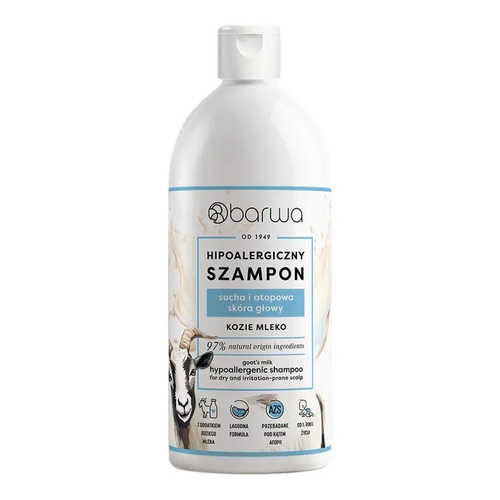
Barwa Hypoallergenic Goat's Milk Shampoo: Gentle Everyday Care
For people experiencing dry, sensitive or easily irritated scalps, Barwa Hypoallergenic Goat's Milk Shampoo may be an option worth considering.
According to the product description, the formula has been developed to gently cleanse the hair and scalp without unnecessarily weighing the hair down.
Its goat's milk ingredient is included as part of a conditioning formula designed to support softness, smoothness and everyday hair care.
The shampoo is also intended for daily use.
It may appeal to those looking for a gentle cleansing product as part of a simple scalp care routine.
However, the term "hypoallergenic" does not guarantee that a product will never cause an allergic reaction.
Likewise, a cosmetic shampoo should not be considered a treatment for dandruff, seborrhoeic dermatitis or other medical scalp conditions unless supported by appropriate evidence and regulatory authorisation.
9. Frequently Asked Questions About Dry Scalp and Dandruff
Is dandruff contagious?
No. Ordinary dandruff is not considered contagious.
Malassezia yeasts are naturally present on the skin of many healthy people.
Can you have both dry scalp and dandruff?
Yes.
Scientific research indicates that dandruff may coexist with reduced scalp hydration and impaired skin barrier function.
Is washing your hair every day harmful?
Not necessarily.
Daily washing can be appropriate when a shampoo is well tolerated and the frequency suits the individual's scalp and hair needs.
Does an itchy scalp always mean an allergy?
No.
Itching can result from dryness, dandruff, seborrhoeic dermatitis, psoriasis, contact dermatitis and several other conditions.
Can dandruff be permanently cured?
Dandruff can often be controlled effectively.
However, it may recur, and some individuals benefit from ongoing maintenance care.
When should I see a dermatologist?
Seek professional advice if you experience severe or persistent itching, significant redness, painful lesions, crusting, oozing, patches of hair loss or symptoms that do not improve after several weeks of appropriate care.
10. Healthy Hair Starts with a Healthy Scalp
Beautiful hair does not begin with a hair mask, serum or styling product.
It begins with understanding the needs of your scalp.
Modern dermatological research shows that dryness, itching and dandruff are more complex than they may first appear.
The skin barrier, microbiome, lipid composition and inflammatory responses all play important roles in scalp health.
That is why effective scalp care is not about using as many products as possible.
It is about recognising the underlying problem and choosing the right approach.
Not every flake is dandruff. Not every itch is dryness. But every persistent symptom deserves attention.
Give your scalp the same care and attention you give to the skin on your face.